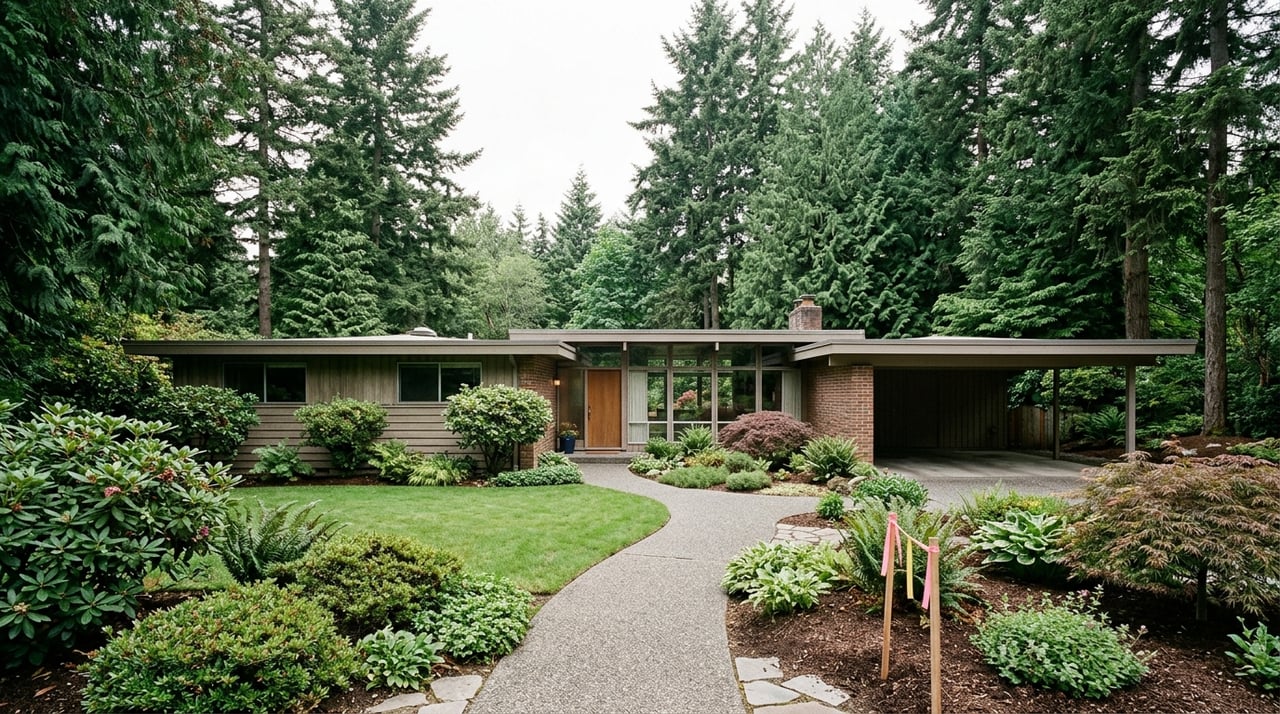
If you are looking at land or tear-down opportunities in Bellevue’s core, the house itself is often only part of the story. In West Bellevue, values remain high, zoning can vary sharply from one parcel to the next, and site constraints can change the math quickly. This guide will help you understand what to look for, where the biggest risks tend to appear, and how to think about redevelopment in a more informed way. Let’s dive in.
Why West Bellevue Leads This Conversation
For this topic, West Bellevue is the most useful frame. The City of Bellevue describes West Bellevue as the area south of Downtown Bellevue, west of I-405, and north of I-90, with established neighborhoods such as Enatai, Bellecrest, Surrey Downs, Killarney Circle, and Meydenbauer Point. The city also notes the area’s access to Lake Washington, Mercer Slough, Enatai Beach, Chism Beach, the Sweyolocken boat launch, and future access tied to South Bellevue light rail and the South Bellevue Park & Ride through its neighborhood profiles.
That location matters because Downtown Bellevue remains the city’s primary economic and employment center and its fastest-growing residential neighborhood. Nearby core neighborhoods continue to attract buyers who want proximity to downtown, established residential streets, and larger homesites. In the city’s latest published snapshots, Bellevue’s median sale price was $1.6 million in February 2026, while West Bellevue’s median sale price was $3.1 million in March 2026, according to the same City of Bellevue neighborhood data.
What Makes a Tear-Down Attractive
In Bellevue’s core, redevelopment value often comes down to the parcel more than the existing structure. A dated home on a well-shaped lot may have far more strategic value than a nicer house on a constrained site. That is why buyers, sellers, and developers tend to focus on lot size, zoning, frontage, setbacks, and overlays before they focus on finishes or floor plans.
A practical rule is simple: cleaner sites tend to offer cleaner execution. Flat lots, regular shapes, compliant frontage, and limited environmental constraints are usually easier to underwrite and easier to move through the permit path. Sites near the lake, on slopes, or within protected overlays may still be compelling, but they often require more diligence, more time, and more capital.
Bellevue Zoning Basics
Bellevue’s residential code still uses a familiar ladder of zones from R-1 through R-7.5. Under the city’s land use code, minimum lot area ranges from 35,000 square feet in R-1 to 4,700 square feet in R-7.5, while minimum street frontage is generally 30 feet across these zones. Front setbacks also vary by zone, stepping down from 35 feet in R-1 to 20 feet in R-2.5 through R-7.5 under Bellevue Land Use Code 20.20.010.
Those details matter because two Bellevue core properties can look similar at first glance but support very different redevelopment paths. A larger-lot property in a lower-density zone may offer privacy and estate-scale potential, while a smaller lot in a different zone may fit a different type of project altogether. Before you assume a site is a candidate for a tear-down or small infill plan, it is worth confirming the actual zone, lot dimensions, setbacks, and any overlays that affect buildable area.
Why Zone and Lot Size Matter
The difference between an R-1.8 parcel and an R-4 parcel can be significant. The research examples show this clearly: 10425 SE 22nd St in Enatai closed for $2.85 million on a 0.46-acre lot and was zoned R-1.8, while 2810 109th Ave SE closed for $1.951 million on a 9,601-square-foot lot and was zoned R-4, based on the reported transaction details in the sales example source.
That does not mean one is automatically a better buy than the other. It means the decision tree changes. The key is not just the headline lot size, but how the site geometry, zoning, and constraints interact with your intended outcome.
How Middle Housing Changes the Decision Tree
Bellevue adopted residential code changes on June 24, 2025 that allow ADUs and nine types of middle housing on lots zoned predominantly for residential use. The city also notes that ADUs are counted as regular dwelling units for total unit count on a site, and a dedicated middle-housing permit became available in January 2026 for single structures with three to six dwelling units through its pre-approved plans and code guidance.
This is an important shift for anyone evaluating core Bellevue land. In the past, many owners and buyers looked at these lots through a simpler lens: keep the house, remodel it, or replace it with one new home. Today, the framework can be more nuanced.
The 1-Lot, ADU, and 3-to-6-Unit Split
If you are evaluating a site, your path may now include options such as:
- Building a single new residence
- Building a single residence with ADUs
- Pursuing a middle-housing structure with three to six units
- Waiting to see how future lot-split rules develop
The right path depends on the site and your timeline. Bellevue also states it plans to draft a land use code amendment in 2026 to implement HB 1096 lot splitting, which means streamlined two-lot splits are still better viewed as a future possibility than a current default underwriting assumption, according to the city’s middle housing FAQ.
Site Constraints That Can Change Everything
A large lot on paper is not always a large lot in practice. In Bellevue’s core, some of the most common issues come from shoreline rules, critical areas, and topography. These are often the reasons a project gets resized, delayed, or reworked.
Bellevue states that the Shoreline Overlay District includes Lake Washington and extends 200 feet landward from the ordinary high water mark. Shoreline development may require a Shoreline Substantial Development Permit, and shoreline residential zones can have tighter lot-coverage standards than inland sites, based on the city’s critical areas and shoreline guidance.
Critical Areas to Check Early
The city’s code also protects:
- Streams
- Wetlands
- Habitats for species of local importance
- Geologic hazard areas such as steep slopes and landslide zones
- Flood hazard areas
Bellevue applies buffers and setbacks around these resources. That means a parcel that appears generous in county records or listing photos may have a much smaller usable building envelope once the protected areas are mapped, according to the city’s critical areas information.
Documents That May Be Required
Depending on the property and the project, Bellevue says plan review may require:
- A Critical Areas Land Use Permit
- A geotechnical report
- A major transit-stop proximity map
- A title report
The city also notes that if a project includes multiple buildings with dwelling units, a separate clearing and grading permit is required so the site can be reviewed as a whole under its middle housing building permit guidance.
What Timelines Really Look Like
One of the biggest mistakes in Bellevue land underwriting is assuming a simple, fast permit path. Bellevue’s project-permit deadlines under the Local Project Review Act began on January 1, 2025 and are listed by the city as:
- 65 days when public notice is not required
- 100 days when public notice is required
- 170 days when public notice and a hearing are required
The city specifically notes that the 170-day category includes design review, master development plans, critical areas, and shoreline substantial development permits in its annual permit performance data.
Why Complex Sites Take Longer
The headline deadlines are helpful, but they are not the whole story. Bellevue also requires preapplication conferences for several more complex permits, including critical areas, preliminary short plats, shoreline conditional use permits, and other more involved review paths through its permit streamlining code amendment page.
The city’s 2025 annual permit report is also a useful caution flag. It shows that multifamily housing permits averaged 457 calendar days with pauses and 763 days without pauses, while construction permits averaged 38 days with pauses and 342 days without pauses. The city notes that this report focused on non-vertical plan review and excluded building permits, so it is best read as a reminder that complicated files can still take substantial time, even when the formal review framework appears straightforward.
What Recent Sales Suggest
Recent sales in Enatai and nearby West Bellevue show why land continues to command attention. The research examples include:
- 10425 SE 22nd St at $2.85 million on 0.46 acres
- 10428 SE 19th St at $2.8 million on 0.42 acres
- 10001 SE 25th St at $2.6888 million on 0.28 acres
- 2810 109th Ave SE at $1.951 million on 9,601 square feet
These examples indicate that older or value-add homes on core sites are still trading at substantial prices. At the upper end, the same research set notes that 10620 SE 22nd St sold for $8.3 million as a newly built 7,117-square-foot home on a 0.65-acre lot, according to the reported sale detail.
The takeaway is not that every older home should be treated as a tear-down. The takeaway is that redevelopment value in Bellevue’s core can be meaningful when the site is clean, the zoning aligns with the plan, and permit risk is understood early.
How to Evaluate a Bellevue Core Parcel
If you are considering buying, selling, or repositioning a land opportunity in West Bellevue, it helps to work through a clear checklist.
Start With the Parcel Basics
Confirm the following first:
- Zoning designation
- Lot size
- Street frontage
- Setbacks
- Parcel shape
- General slope and access
These basic factors often determine whether a site belongs in a straightforward replacement-home category or a more complex redevelopment category.
Then Review Constraint Risk
Next, review whether the parcel may be affected by:
- Shoreline overlay
- Wetlands or streams
- Steep slopes or geologic hazard areas
- Flood hazard areas
- Other critical-area buffers
In core Bellevue, these issues are often what separate the easiest opportunities from the most time-intensive ones.
Finally, Match the Site to the Strategy
Once the site is understood, the strategy can be clearer. You may be looking at a custom new-construction opportunity, a hold-and-improve scenario, or a middle-housing path that deserves deeper study. In each case, the best results usually come from realistic underwriting, careful permit planning, and local guidance grounded in Bellevue’s actual review process.
For owners, that same logic matters when deciding whether to sell as a home, market a property as land, or position it for a builder or developer audience. The way a property is presented can meaningfully affect who responds and how they value the opportunity.
Bellevue core land deals are rarely won on guesswork. They are won on detail, timing, and a clear view of what the site can truly support. If you are weighing a tear-down, infill property, or redevelopment sale in West Bellevue, working with a local team that understands lot characteristics, buyer demand, and how these opportunities are marketed can help you move with more confidence. If you would like tailored guidance on a specific parcel or property strategy, connect with Whittlesey Properties.
FAQs
What Bellevue core neighborhoods are most relevant for land and tear-down opportunities?
- West Bellevue is the key frame for this topic, including areas the city identifies such as Enatai, Bellecrest, Surrey Downs, Killarney Circle, and Meydenbauer Point.
What Bellevue zoning factors matter most for tear-down properties?
- The most important starting points are zoning designation, minimum lot area, street frontage, setbacks, parcel shape, and whether overlays reduce the usable building area.
What Bellevue site conditions most often trigger extra review?
- Shoreline location, wetlands, streams, steep slopes, landslide risk, flood hazard areas, and other critical-area conditions are common reasons for added review or permitting complexity.
What Bellevue permit timelines should small developers expect?
- The city lists review targets from 65 to 170 days depending on notice and hearing requirements, but complex projects can take longer in real-world processing, especially when critical areas or shoreline issues are involved.
What does Bellevue middle housing mean for core land buyers?
- Bellevue now allows ADUs and several middle-housing types on lots zoned predominantly for residential use, and projects with three to six dwelling units may use the city’s dedicated middle-housing permit path.
What is the current status of Bellevue lot splitting for redevelopment?
- Bellevue has said it will draft a 2026 code amendment to implement HB 1096 lot splitting, so streamlined two-lot split assumptions are better treated as a future possibility rather than a current baseline.